Olivia Pope, is a savvy, competitive, efficient, determined, and brilliant crisis management lawyer in Washington D.C whose character is played by Kerry Washington in the hit series ‘Scandal.’ It is often rare to find a quality television series or film that portrays black women in roles that are not explicitly typecast. Given the current representations of black women within the margins of our society; a black female character in any medium playing a lead role has rippling consequences of varying degrees including breaking the presumptions that black women are monolithic and their narratives are limited to specific archetypes. Rooks (2004) demonstrates the significance of how black women representation can shape culture, narratives and influence how audience members regard themselves as well as others. Olivia represents that a black woman can be a successful entrepreneur, that she is capable of breaking cultural barriers as exampled via her interracial relationships or crossing political boundaries by supporting the Republican Party. Thus, accepting and acknowledging the diversity within blackness one can organize a rhetorical analysis of Olivia Pope’s character and identity in the context of black feminism.
In the following essay I am going to analyze three episodes of Scandal which include: “It’s Handled, Mama Said Knock You Out and The Lawn Chair to illustrate the complexities and interdependencies that aggregate the reality and practicality of the [black] feminist discourse. Additionally, throughout the essay I posit my arguments to critically examine the question, Is Olivia Pope a Feminist? And how her intersections of race, gender, class either contest or permit alignment with feminism.
Providing a conceptualization of feminism and intersectionality will assist with determining a fundamental understanding of the context in which I am framing this character. A democratic understanding of feminism is the concept of providing social, economic and political equality and equity to both genders while remaining vigilant and conscious that sexism, heterosexism, racism, misogyny, classism, genderism, able-bodism, historical context and geographic location each play a significant role. Recognizing and taking action in the advancement of disassembling oppressive systems, institutions or structures that perpetuate racial domination or power and authority over others that lead to the infringement upon civil and human rights. Similarly, intersectionality can be expanded into three proportions according to Crenshaw (1991) structural intersectionality, political intersectionality and representational intersectionality. Theoretically, establishing a feminist position does not occur overnight and can sometimes be a lifelong process of experiences and critical thinking. There is potentially a running theme that each episode is a separate event in which Olivia traverses throughout her personal and professional crisis that ultimately lead her to a thorough embodiment of feminism. Each moment realistically captures how black women experience feminism and experience finding feminism.
Firstly, I’m going to analyze the intersections of race, gender and location within the episode ‘It’s Handled.” In this episode, Olivia’s father is forcefully encouraging her to leave the country after her name is leaked in connection to an affair with the president of the United States. She has to manage personal crisis and professional disparity simultaneously once she decides to stay. Our first contestation of Olivia as a feminist appears through her intersection of both race and gender. Jezebel, is the term and archetype that describes a black woman whom is sexually promiscuous or hypersexual (Collins, 2002) (Rooks, 2004). We can see how this narrative could potentially apply when examining her participation in President Grant’s infidelity. This is a historically problematic representation of black women, according to Rooks (2004) the dominant culture regarded black women as being oversexed and desiring multiple sexual partners because of white European men first visits to Africa and being perplexed by African women being freely nude or wearing little coverings. “Within the U.S culture, racist, and sexist ideologies permeate the social structure to such a degree that they become hegemonic, namely, seen as natural, normal and inevitable. In this context, certain assumed qualities are attached to Black women are used to justify oppression. From the mammies, jezebels and breeder of women of slavery…. negative stereotypes applied to African American women have been fundamental to Black women’s oppression” (Collins, 2002, pg.5).
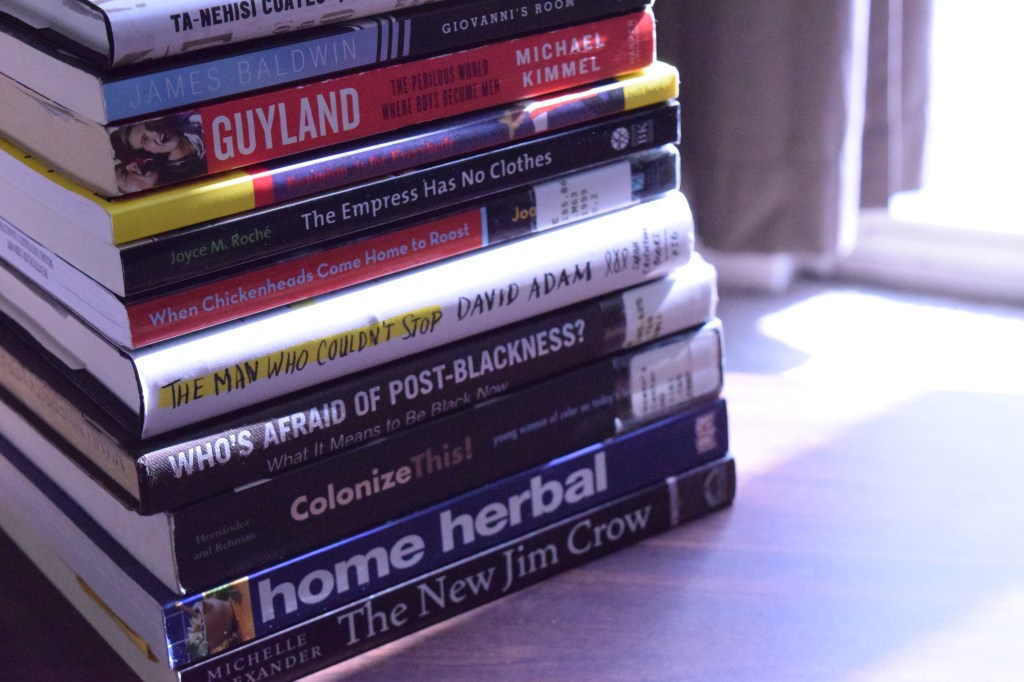
This quote describes the complicated nature of Olivia’s actions and her expression of sex and sexuality. If she were a man she would be considered sexually liberated or the blame would be displaced. Likewise, President Grant is rarely the fixated character when discussing the affair even though he is the one whom is breaking his marriage vows and initiates nearly every encounter. Olivia choosing to continue her relationship with the President can be considered inspiring and empowering because she does so in spite of the adversity of race and gender. Simultaneously, this can be argued as an attempt by President Grant to colonize her body and her being. President Grant as the culprit behind leaking her name to the press in a sense asserted an act of dominance and control over Olivia. Her life, legacy would belong to him because of this strong depiction of sexual black women as jezebel’s. She would become only known for being the President’s mistress and would lose the representation and the image that she had worked hard to achieve, so that in the end he may benefit by having control over her body. An example is also made evident in Colonize This by Hernandez and Rehman (2002) where Cristina Tzinzun discusses how her father believes himself superior to women of color because he has money and power. That he can achieve their allegiance through conquests of sexuality, geographic dislocation, physical abuse or exploitation and through tone/body policing (pg. 21-25).
In this episode ‘Mama Said Knock You Out’, Olivia’s worldview and character appears to contest with the expectations of feminism. Rendezvous with the president again can be argued as sexually liberated however her actions most closely match the black woman archetype of jezebel as being sexually promiscuous and hypersexual. The relationship is clearly taboo and yet she demonstrates an inability to maintain a healthy dissonance and chooses instead to be his mistress. This however correlated well with a quote by Cyrus Beene in which he states that all of their duties align with “serving at the pleasure of the president.” Here there is a dichotomous meaning, Olivia literally in a sexual relationship with the president as well as serving her country as an American which applies to her geographic location. In whereas she does have the constitutional freedoms to disagree, dislike and speak out against the president which is not a privilege granted to scores of women of color in countries around the globe. This meaning does not apply the same to Olivia as it may to another woman because of her intersection of location. It would be easy to idolize her position in being in close proximity to persons of high status, rank and authority however her mother has a different interpretation of Olivia’s presence in the ‘White’ House.
“Cleaning up those people’s messes, fixing up their lives. You think you are family but you are nothing but the Help.” On one hand this brings up the contested concept of feminism that discusses women’s roles in society. A more traditional role would be the woman who stays home and does reproductive work: having and raising children, household chores such as cleaning and cooking with limited time for anything else. A more contemporary role would include the career woman whom is educated, has a successful job, independent wealth and no family or the woman with dual roles between domestic and career simultaneously. It is argued in the feminist discourse that the more traditional role is oppressive and should be discouraged. Her mother’s statement could be construed as an insult of Olivia’s womanhood as well as feminism.
Although, as a black woman there are additional constructions applied to womanhood and being referred to as the Help. The obvious being black women enslavement and being forced to work for white families whether in the fields or doing household duties. There is also the secondary assumption of segregation where black women often were hired to serve white families and to nanny for their children. Both of these narratives could potentially include the Mammy archetype in which Olivia could be representing with her work as crisis management for the White House. The jolly slave that is more than happy to be enslaved and to run around with a mop to clean their messes whenever they ring for her (Collins, 2002).
Even though she may have access to the White House and the world of politics, wealth and whiteness she is not family. Her father inserted “Families stick together” mirroring her mother’s accusations that she was only the Help. This is suggestive that at the end of the day (and episode) she is still not equal to them and regardless what she may be fooled into believing, they are not her family. They have privileges that she will never obtain regardless of her economic success or ability to maneuver through scandals and crisis’s with ease. She can also be easily cast out if she makes any missteps that they decide are inappropriate or irreprehensible. They come from a world in which the vantage point seeks to conquer, control or destroy her as a black woman. No matter the amount of favors, successes, wealth or power she accumulates for herself or for others; much of the world still see’s her as just another black woman.
The Lawn Chair subsequently connects deeply to Olivia’s intersectionality of an upper class Black woman in America. She is hired to handle the optics of law enforcement after an officer guns down a young black man in the street. This scenario challenges Oliva’s sociopolitical and socioeconomic positions as she has feud between the black activists demanding justice and law enforcement demanding cooperation and respect for their authority. Marcus Walker, a civil rights activist is the first to challenge her when she demands that he is trying to incite outrage whereas she wants to defuse the situation. He implores her to spend a moment of introspection and understand her position with more clarity. Olivia’s worldview in this moment in from the vantage point of her class position. As a more affluent black woman she does not experience the same racialized oppression as African Americans in poorer communities, she is less vulnerable to systematic racism (Collins, 2002). Marcus even mentions to her that she probably has rarely visited that part of the neighborhood except for soul food, in a sense appropriating her own culture and community. Her class position is indicated by the goods she has acquired through consumerism including her luxury apartment, office and clothing. Rooks (2004) states:
“…the politically and socially active group of African Americans who were involved with these magazines urged the acquisition of what they believed to be redemptive skills, demeanor, clothing, behaviors, and attitudes that could denote distance from a debased and embarrassing sexual history and signal an embrace of dominant cultural understandings of womanhood and gentility” (pg.9). The dissonance that Olivia has created can be perceived as a betrayal for her work does little for social justice, social activism or the advancement of women or people of color; rather her facilitation often makes it permissible for oppressive forces and structures to remain intact while protecting the perpetrators from being held accountable or responsible. All identities exist uniformly unable to be separated from one another (Crenshaw, 1991). Due to this fact, Olivia’s intersections of race, class and gender also have implications of redefining womanhood. The womanhood that she characterizes appears to align most with what is accepted as proper womanhood as situated alongside white women (Rooks, 2004). In the latter portion of the episode, Olivia recognizes that the officer’s disproportionate treatment of the black community and interjects ‘the fact that they stand in groups and say things you do not like, does not make them a mob! It makes them Americans!” Following up with not only joining the protestors but also providing the Attorney General with a realistic understanding of the limits to the criminal justice system. She manages to reflect and see the complexities of her own social positioning and realizes that being more affluent and her distancing herself is merely a vague illusion that is safe and protected from racism or sexism. She aides the protestors and the victim’s father in receiving justice and honors them by taking them to meet the President of the United States, exercising her own unique privileges to provide a service.
Olivia Pope ostensibly embodies intersectional and black feminism in her behavior, character and her synchronization with each of her identities. Olivia’s most liberally articulated rule is to own and control your own narrative and your own story. This is critical to her operations at Pope & Associates but also in her personal circumstances. Historically, black women have been colonized and have had dominant culture, ideology, concepts physically, emotionally, spiritually and psychologically detriment the essence of their being. However, the voice is one aspect that has never been fully destroyed. Through songs, hymns and gospels, literary works or speeches and protests. The voice is central to one’s own story and fighting to express that voice in all dimensions is crucial to resistance. Olivia may contest feminism and black feminism through embodiment of archetypes such as jezebel, mammy, lady or matriarch but notice that although she manages to demonstrate each narrative; she also surpasses those narratives and begins to create her own. Bell hooks (2000) articulates that:
“It is the freedom to decide her own destiny; freedom from x-determined role; freedom from society’s oppressive restrictions; freedom to express her thoughts fully and to convert them freely into action. Feminism demands the acceptance of woman’s right to individual conscience and judgement. It postulates that woman’s essential worth stems from her common humanity and does not depend on the other relationships of her life.”
When her father demands that she always fights to be ‘twice as good’ she resists by her own path despite the obstructions and barriers, refusing to live her life in congruence with the larger oppressive structures including actively resisting because that is oppressive within itself. Due to the nature of society needing to compartmentalize individuals her intersections of race, gender and class will always require her to be more or less of one or the other. Regardless, of her actions those actions will determine a negative representation or role eventually because that’s just how things work right now. Each episode can be characterized as a journey towards greater solidarity, resistance, mastery and embodying feminism ideology. The personal is political; resistance appears in infinite forms and facets that is conformed to each individual’s unique intersections of identity, social positioning, geographic location and chronological time. One person’s feminism may not look, sound or feel like yours but it can still be feminism that is just as powerful and moving, with the ability to make great social change. What matters most is her value to commit towards progress and change and that she retains the ability to act autonomously and independently for what best suits her own desires and needs. Olivia Pope, is definitely a feminist.
References
Collins, P. H. (2002). Black feminist thought: Knowledge, consciousness, and the politics of empowerment. Routledge. Crenshaw, K. (1991). Mapping the margins: Intersectionality, identity politics, and violence against women of color. Stanford law review, 1241-1299. Davies, C. B. (1994). Black women, writing and identity. London and New York: Routledge. Hernandez, D., & Rehman, B. (2002). Colonize this!: Young women of color on today’s feminism. Seal Press. Hooks, B. (2000). Feminist theory: From margin to center. Pluto Press. Hooks, B. (2000). Feminism is for everybody: Passionate politics. Pluto Press. Rhimes, L. S. (Producer). (2012). Scandal [Television series]. Los Angeles, CA: American Broadcasting Company Studios. Rooks, N. M. (2004). Ladies’ pages: African American women’s magazines and the culture that made them. Rutgers University Press.
 The Wayward Scholar
Leave a comment